
2026 Hoof Geeks Clinics: Learn What’s Really Inside Your Horse’s Hoof
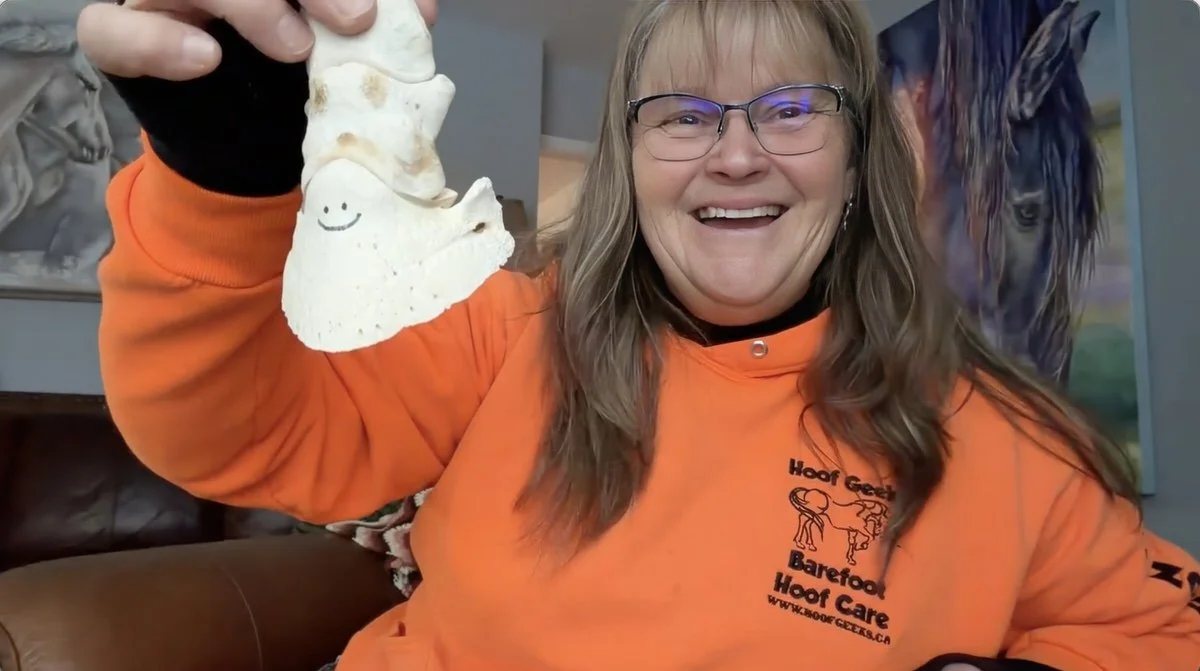
Christine shares what you’ll learn at our 2026 clinics — from healthy coffin bone anatomy to real-world pathology and radiographs — so you can understand what’s truly happening inside your horse’s hoof.
What’s Actually Inside Your Horse’s Hoof Capsule?
If you’ve ever wondered what’s actually inside your horse’s hoof capsule — and how that affects soundness, performance, and long-term health — that’s exactly what we dive into at a Hoof Geeks clinic.
When we start Day One of our clinics, we begin with the foundation: anatomy. Not just textbook diagrams, but what the coffin bone really looks like, how it functions, and what makes it healthy.
And we don’t just show you pictures.
We travel with a large teaching table full of equine hoof and limb display so you can see, touch, and feel the structures you’re learning about. You’ll see the coffin bone, navicular bone, digital cushion, laminae — not in a drawing, but in real life. Students also have the opportunity to trim a fresh cadaver hoof, so you can understand what you’re trimming before you ever pick up a rasp on a live horse.
Understanding the Coffin Bone and Healthy Hoof Anatomy
Inside every hoof capsule sits the distal limb of your horse — P1, P2, and P3. The coffin bone, also called the pedal bone or distal phalanx (P3), is the structure that everything depends on.
We show you what a healthy coffin bone looks like in real life — its shape, density, concavity, and what those details tell you about the health of the entire foot.
When that bone is dense, crisp along the solar margin, and properly nourished, you have the potential for a strong, resilient foot.
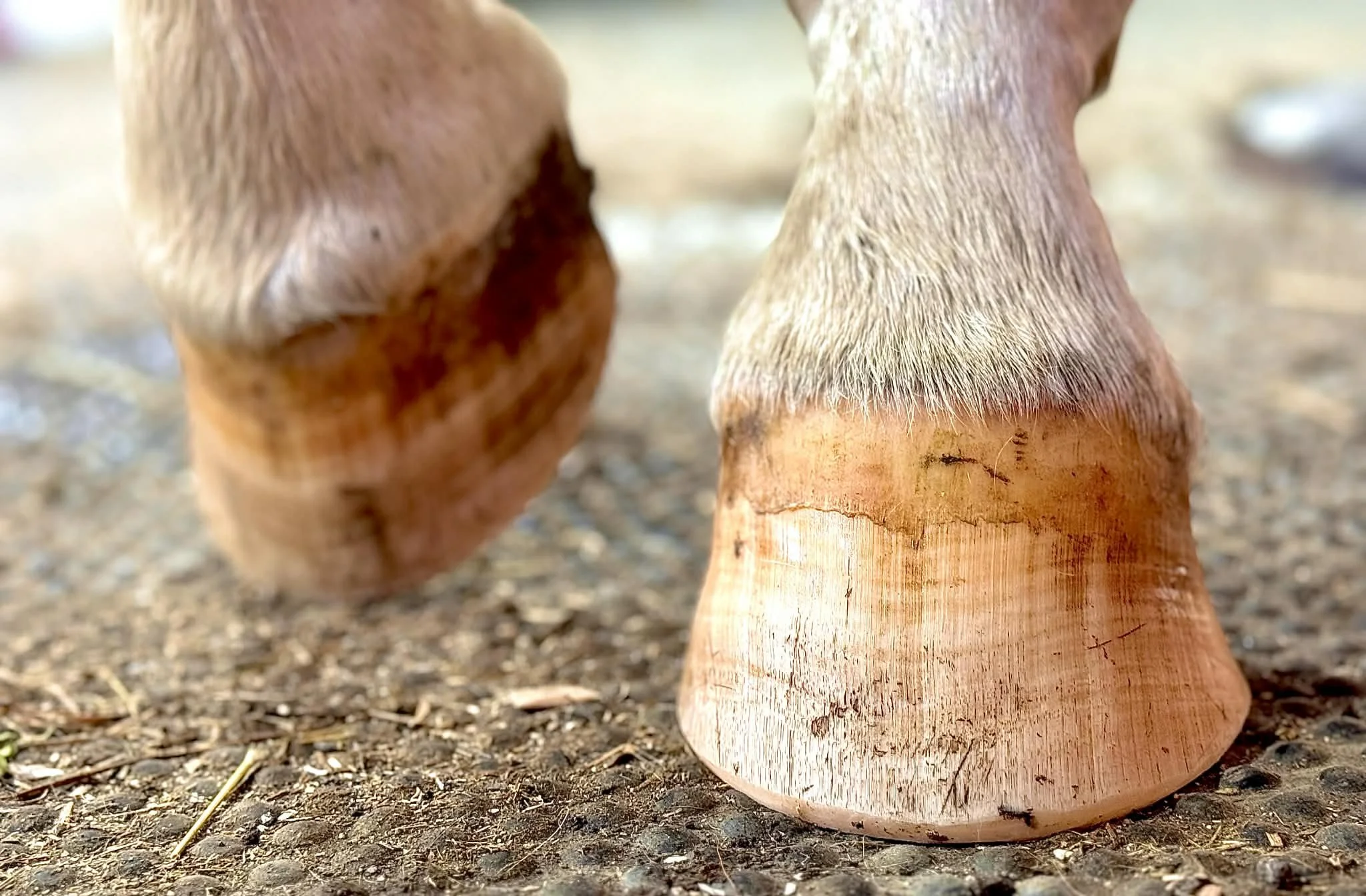
How Does a Healthy Hoof Become Unhealthy?
But how does healthy become unhealthy?
Is it trimming?
Sometimes.
Is it diet?
Lifestyle?
Lack of circulation?
Shoes?
Radiographs that weren’t read properly?
At our clinics, we build the story from the beginning. We talk about blood flow, concavity, the navicular bone, cartilage, and how the hoof capsule flexes when a horse is barefoot. That flexion matters — it circulates blood and keeps internal structures alive and functioning.
Navicular, Laminitis, and Hoof Pathology Explained
Day Two is where things really connect. We talk about pathology.
What is navicular, really?
What is side bone?
What is laminitis?
What is “sinking”?
What actually happens to the internal structures?
Can you see it on radiographs?
Are all radiographs created equal?
Navicular, for example, isn’t just a bone problem. It often starts with soft tissue breakdown. And many times, what’s happening inside the hoof capsule has been developing quietly for months or even years before anyone recognizes the signs.
Why Hoof Education Matters Before You Buy a Horse
One of the things students love most about our clinics is that we don’t just teach trimming. We teach understanding.
Many students who attend don’t even own a horse yet. They come because they want to know what to look for before buying. And that knowledge alone can save thousands of dollars — and years of heartache.
It’s not just about picking the right colour horse. It’s about picking a sound one… and knowing how to keep it that way.
2026 Western Canada Hoof Geeks Clinic Schedule
We’re heading back out west again this year with our progressive 4-day Hoof Geeks clinic — designed as a complete experience, with options to attend one to four days.
If you’re looking for our full 2026 Western Canada clinic schedule and locations, you can see all the dates and stops here.
We have:
One clinic in Manitoba (April)
One clinic in Saskatchewan (late August)
Six clinics in Alberta
Seven clinics in British Columbia
Flexible Payment Options and Student Referral Rewards
We’re offering something special this year!
If you bring a friend or refer someone who attends, you receive $100 off your clinic tuition. Two friends? $200. Three? $300. We want to reward our students for helping us spread the word.
And if paying in full upfront is a challenge right now, we’ve connected Klarna to our clinic registration, but if you don’t wish to use Klarna or don’t qualify…email Francine. We want to make this education accessible for everyone!
Visit Us at the Red Deer Expo

If you’re in Alberta, come see us at the Red Deer Expo this year. We’ll have something new and exciting at our booth — and yes, it’s anatomy-related. We’ll let you discover that surprise in person.
Whether you’re a horse owner, future owner, trimmer, or simply someone who wants to truly understand how the hoof works from the inside out, we would love to see you at a clinic in 2026.
In the meantime… try to stay warm, and yay February — only six more weeks until spring!
— Christine xo
READ MORE ABOUT our ➜ clinic structure/outline
Interested in hosting a clinic? OR Why does barefoot matter anyway?
Join our mailing list HERE. We only send out emails when we have new clinics, news and new membership videos.
